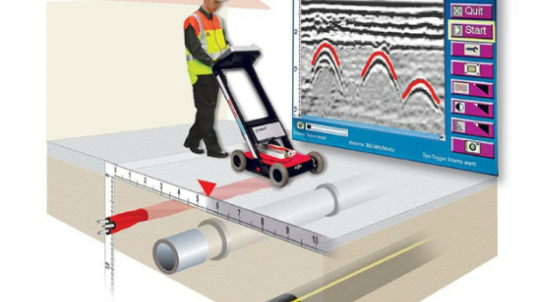
Ground Penetrating Surveys, or Ground Penetrating Surveys, are becoming more essential in a world where development and digging projects are often obstructed by concealed barriers beneath the top layer. This technology offers a non-invasive method for investigating the underlying conditions, providing important insights before groundwork begins. Whether you are a property developer, an researcher, or a civil engineer, grasping the fundamentals of Ground Penetrating Surveys can change the way you conduct site evaluations and construction planning.
In this write-up, we will explore the potential of Ground Penetrating Surveys and why they are necessary for modern building and infrastructural development. We will consider the multiple applications of Ground Penetrating Surveys, compare it with conventional utility locating methods, and analyze how it can help prevent significant schedule setbacks. From learning about the science behind the technology to assessing its positives for job site safety and environmental assessments, we will reveal everything you need to know about GPR and how they are reshaping our approach to underground investigation.
Grasping Ground Penetrating Surveys
GPR, or GPR, are non-destructive geophysical methods utilized to explore subsurface conditions. It utilizes radar pulses to map the subsurface and can identify different materials and structures hidden under the ground. This technology serves a crucial purpose for detecting things like service lines, cavities, and even archaeological features, making it an important tool in many fields, including building, environmental studies, and historical research.
Conducting a survey of a Ground Penetrating Survey involves examining the terrain with a radar device that transmits high-frequency RF signals into the soil. When these waves encounter various materials, they are reflected back to the top, where they are captured and analyzed. The information gathered enables experts to create detailed images and maps of what is located underneath the surface, assisting them to make knowledgeable decisions prior to commencing any excavation starts.
Understanding the capabilities and constraints of GPR is crucial for optimal use. It is imperative to recognize that while this technology can provide a abundance of information, elements such as the type of soil, moisture content, and the depth of the target objects can affect the integrity and accuracy of the results. As such, it is essential to consult experienced professionals who can analyze the results appropriately and make certain that the right methods are utilized for particular requirements.
Benefits of GPR
Ground penetrating surveys offer a range of advantages that significantly contribute to effective project planning and execution. One of the key benefits is the ability to create detailed images of subsurface conditions without interfering with the ground above. https://lassiter-avery-3.blogbright.net/mapping-the-unexplored-the-field-behind-subsurface-investigations -destructive method allows for the detection of existing infrastructure, geological features, and other underground structures. Consequently, it helps engineers and developers make informed decisions, reducing the risk of unexpected discoveries during excavation that can lead to costly delays.
Another key benefit is enhancing safety on construction sites. By accurately locating PAS 128 Surveys London and potential hazards, GPR play a critical role in preventing accidents such as utility strikes. These surveys provide vital data that can inform safe digging practices, ensuring that workers and the surrounding environment are protected. As a result, they not only help avoid costly damage but also promote a safer workplace culture, which is essential for all construction projects.
Moreover, the use of GPR can lead to significant cost savings. By detecting potential issues before excavation begins, project teams can adjust plans accordingly, minimizing the risk of unforeseen expenses. This proactive approach can streamline project timelines and resources, allowing developers to stick to budgets and schedules more effectively. Overall, the implementation of ground penetrating surveys into construction and infrastructure projects is an invaluable investment that pays off through enhanced efficiency and risk management.
Applications of Ground Penetrating Surveys
Ground Penetrating Surveys are used across various industries to provide important insights about below ground conditions. In building, they are crucial for locating utilities, analyzing soil stability, and pointing out potential hazards before excavation starts. By detecting underground features such as pipes, cables, and voids, GPR helps avoid costly delays, injuries, and damages during construction operations. This proactive approach not only boosts the efficiency of planning but also considerably improves overall project safety.
In environmental assessments, Ground Penetrating Surveys play a key role in identifying contamination and other subsurface anomalies. They help in mapping geological features and groundwater paths, allowing for effective site investigations prior to construction. These surveys are particularly important in assessing sites for industrial and agricultural use, providing a clear understanding of underground conditions that could affect environmental safety and compliance.
Furthermore, Ground Penetrating Surveys are being more and more adopted in archaeological studies and historical preservation. They allow archaeologists to reveal hidden artifacts and structures without destructive digging, helping to protect the integrity of historical sites. By employing GPR technology, researchers can visualize subsurface remains, giving them the chance to study history in a non-invasive manner, ensuring that valuable cultural heritage is preserved for future generations.